

Skipped beats, a racing heart, a pulling feeling in your chest – or simply wanting to know whether your heart is okay? An EKG is the fastest and simplest test to make your heart’s electrical activity visible: painless, no radiation, and done in a few minutes. Here you’ll learn how a resting EKG works, what it can show – and where its limits are.
Key takeaways
- An EKG records the electrical impulses that control every heartbeat – completely painless and with no radiation.
- The actual recording takes only seconds to a few minutes; the whole appointment is usually done in 10–15 minutes.
- A resting EKG detects heart rhythm problems, conduction problems and clues to a current or past heart attack, among other things.
- A normal resting EKG is reassuring, but it doesn’t rule out every heart condition – a doctor should interpret it.
- With us, the EKG is part of a structured heart and circulation check-up – with results explained in plain language.
What is an EKG – and how does it work?
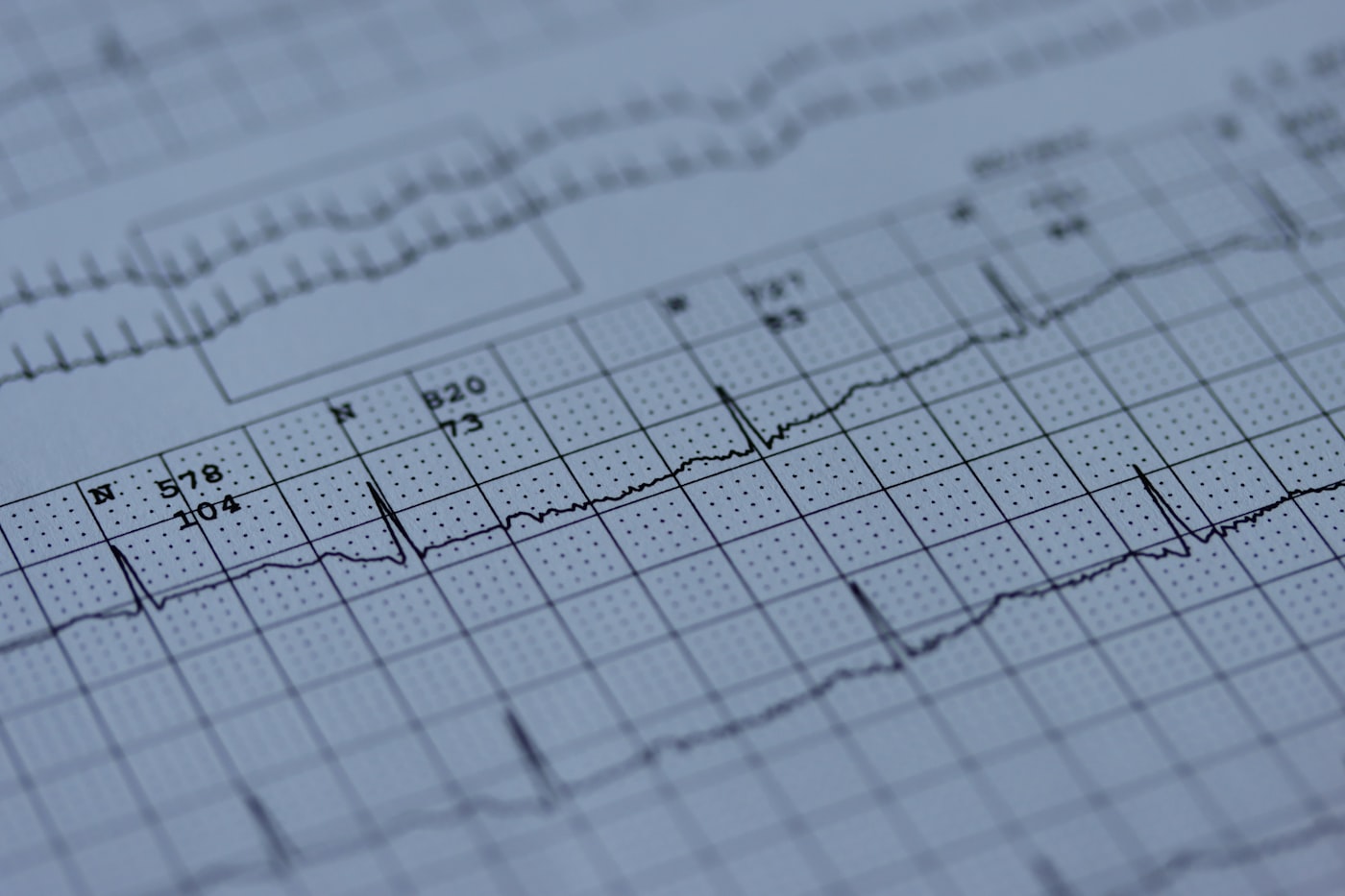
Every heartbeat starts with a tiny electrical impulse that spreads in a wave across the heart muscle and makes it contract. An electrocardiogram (EKG) measures these currents through electrodes on your skin and records them as the familiar spiky line. From the shape, height and spacing of these spikes, we can read whether your heart beats regularly, whether the signal travels through the heart in an orderly way, and whether there are signs of damage to the heart muscle.
Good to know: the machine only picks up your body’s own signals – no electricity flows into your body. That makes the test completely painless, free of radiation, and safe to repeat as often as needed, including during pregnancy.
When does an EKG make sense?
- When you have symptoms: skipped beats, a racing heart, dizziness, shortness of breath during exertion, or unexplained pressure in your chest – the EKG is the first diagnostic step here.
- If you have high blood pressure: years of high blood pressure can leave marks on the heart, such as a thickened heart muscle – the EKG gives the first clues.
- As part of preventive care: as one part of the health check-up, especially if heart disease runs in your family.
- Before special physical demands: for example before starting an intense training program or before surgery.
- For follow-up: with known heart conditions, or when taking medications that can affect your heart rhythm.
How a resting EKG works at our practice
No need to worry before your appointment – few tests are simpler. Here’s how an EKG goes at Privatpraxis Lindenthal in central Stuttgart:
- Preparation: you undress from the waist up and lie down comfortably on the exam table. Your ankles and wrists stay uncovered.
- Placing the electrodes: ten sticky or suction electrodes are placed on your chest, arms and legs – these produce the twelve standard leads.
- Recording: now all you do is lie still, breathe normally and don’t talk. The actual measurement takes about 10 to 30 seconds.
- Discussion: we read the tracing right away and explain the result in plain language – including whether any further steps make sense, and which ones.
Tip for a clean EKG: come to your appointment as relaxed as possible, and skip coffee, nicotine and exercise shortly beforehand. It’s best not to put lotion on your upper body on the day of the test – the electrodes stick much better. Muscle tremors (from being cold or tense, for example) can disturb the tracing.